Birdwatching in Guyana
Planning a birding trip to Guyana: around 900 species, key sites from Georgetown to the South Rupununi, harpy eagle and cock-of-the-rock, seasons and guides.
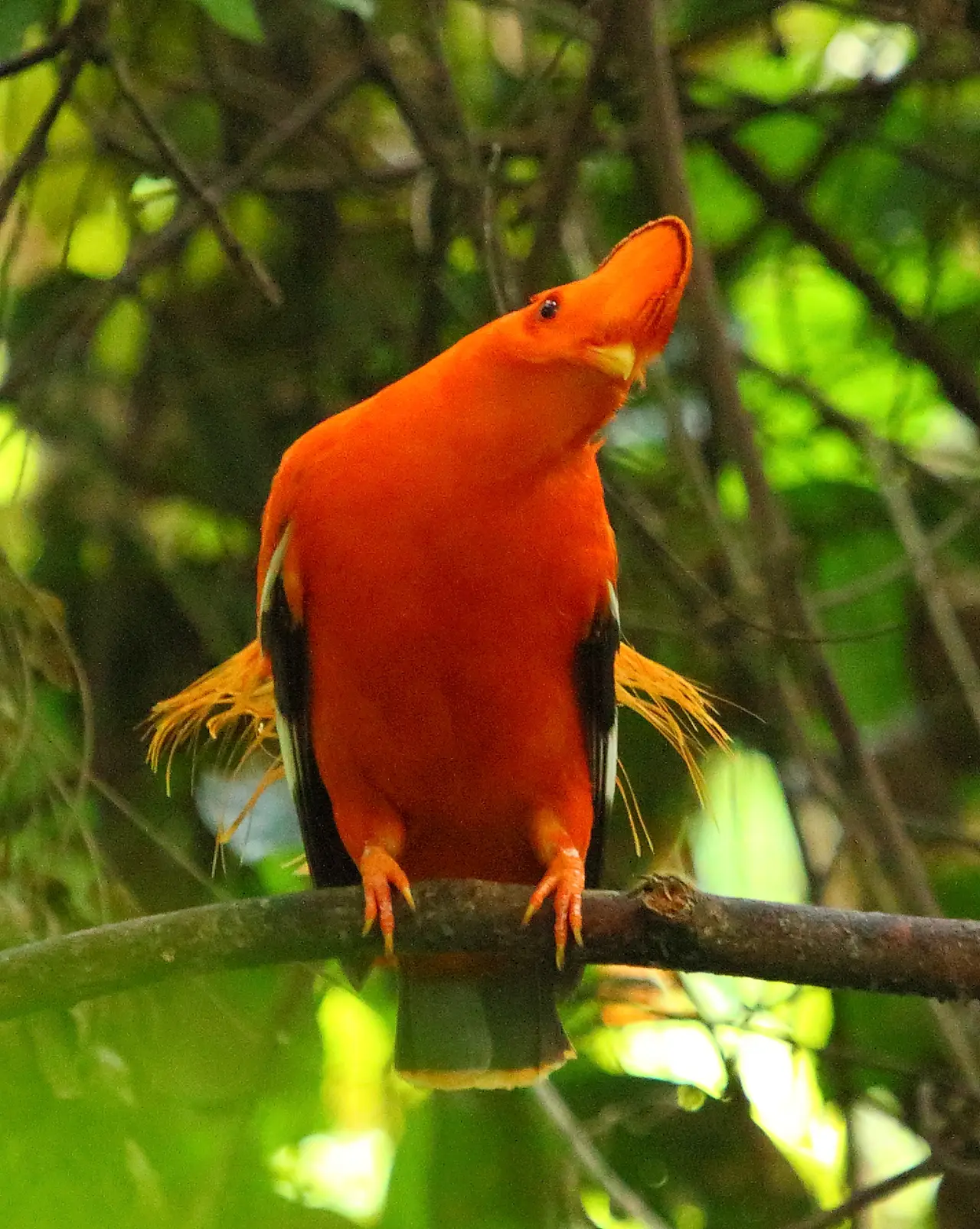
Guianan cock-of-the-rock, photographed at Iwokrama
In short
Guyana has a bird list of around 900 species across coast, rainforest and savannah, with Guiana Shield specialities that are hard to see elsewhere. A birding trip of 10 to 14 days can cover the main habitats with local guides.
Guyana sits on the Guiana Shield, one of the oldest geological formations on Earth, and its birds reflect that: a strong set of Guianan specialities alongside widespread Amazonian species, savannah birds and coastal waterbirds. Because the country is lightly visited, birding here often means having a site, and a good guide, to yourself.
The main birding areas
- Georgetown and the coast: the Botanical Gardens for parrots, flycatchers and waterbirds; the Mahaica River for the hoatzin.
- Kaieteur: plateau specialities and, often, Guianan cock-of-the-rock near the trail.
- Iwokrama and the canopy walkway: rainforest and canopy species at eye level at dawn; roadside birding along the forest.
- Surama and the North Rupununi: forest edge and savannah, with harpy eagle nests visited when active. Specialist trips also travel into the hills of the northern savannah for the sun parakeet.
- Karanambu and the Central Rupununi: savannah, wetland and river birds, including jabiru and many herons and raptors.
- South Rupununi: open savannah species and the red siskin, visited with local conservation guides.
Planning a birding trip
A good birding itinerary allows repeated early mornings in each habitat and avoids wasting the best hours on transfers. That usually means:
- At least two nights at each forest site, so you get two dawns.
- Flights for long transfers to protect birding time.
- A dedicated or specialist guide if you have specific targets.
Our 12-day birding itinerary shows how this fits together.
Seasons
Birding is good year-round. The dry season (roughly September to April) makes overland access easier and concentrates waterbirds; the wet season brings breeding activity and green landscapes but more travel disruption. Some species are seasonal, so tell us your targets and we plan around them.
Practical notes
Bring binoculars you trust (spares are not easy to find locally), a rain cover for optics and lightweight long clothing. A scope is useful on the savannah. See health and packing.
Questions travelers ask
Do I need a specialist bird guide?
For serious birding, yes. Local guides at Iwokrama, Surama and in the Rupununi know the calls and sites, and some trips add a dedicated birding guide throughout. Your proposal states the guiding arrangement.
Can I see the hoatzin near Georgetown?
Yes. The hoatzin, Guyana’s national bird, is often seen in riverside vegetation along the coast, including on the Mahaica River, which makes a good morning trip from Georgetown.
Is the red siskin possible?
The red siskin has a population in the South Rupununi, where it is the focus of conservation work. Visits are arranged with local guides in ways that protect the birds, and sightings are not guaranteed.
Sources and checks
Tell us what you want from Guyana
Share your dates, interests and the pace you enjoy. We reply with suggestions and, when you are ready, a written proposal with the route, prices, inclusions and who provides each part of the trip.